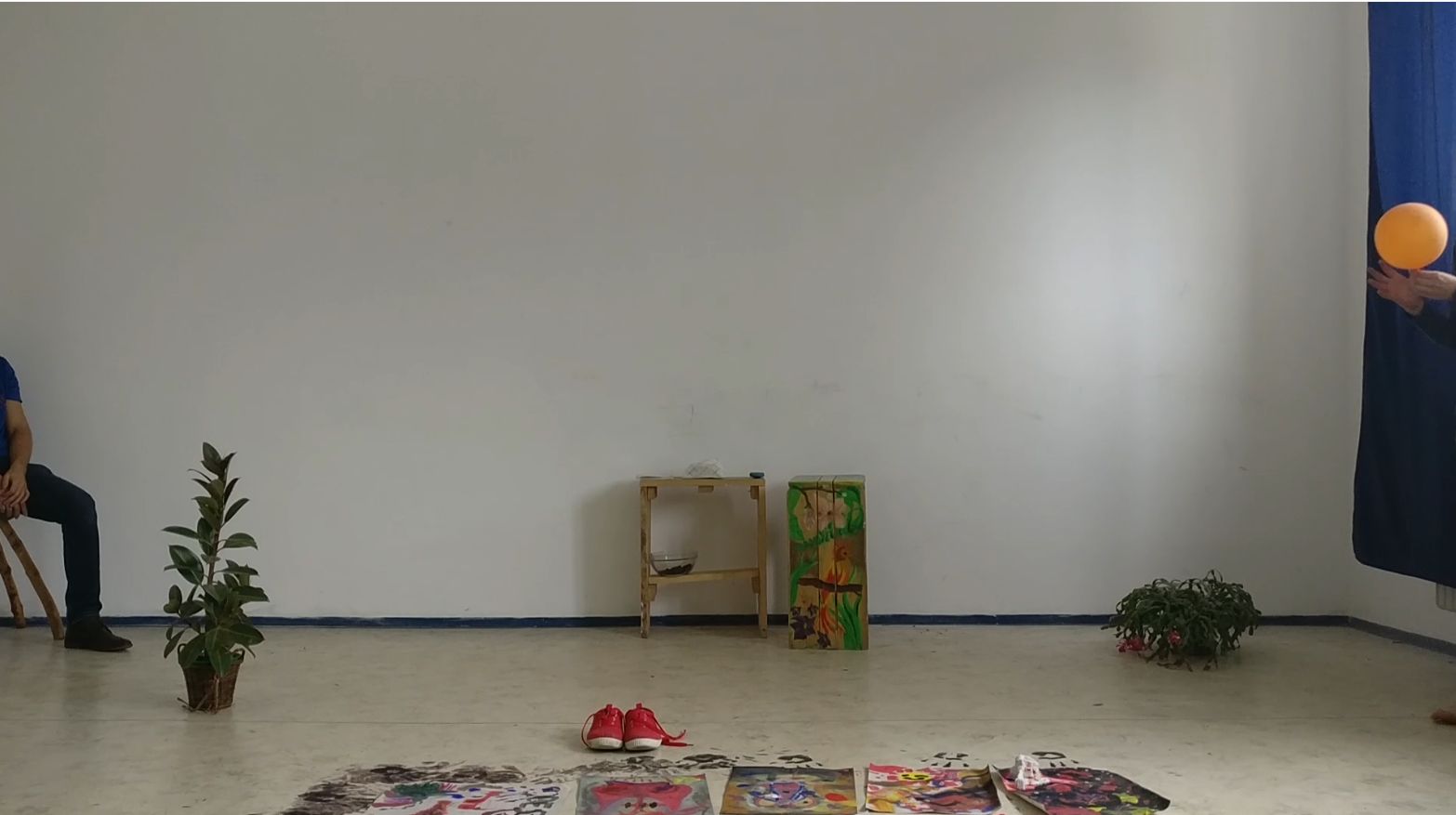
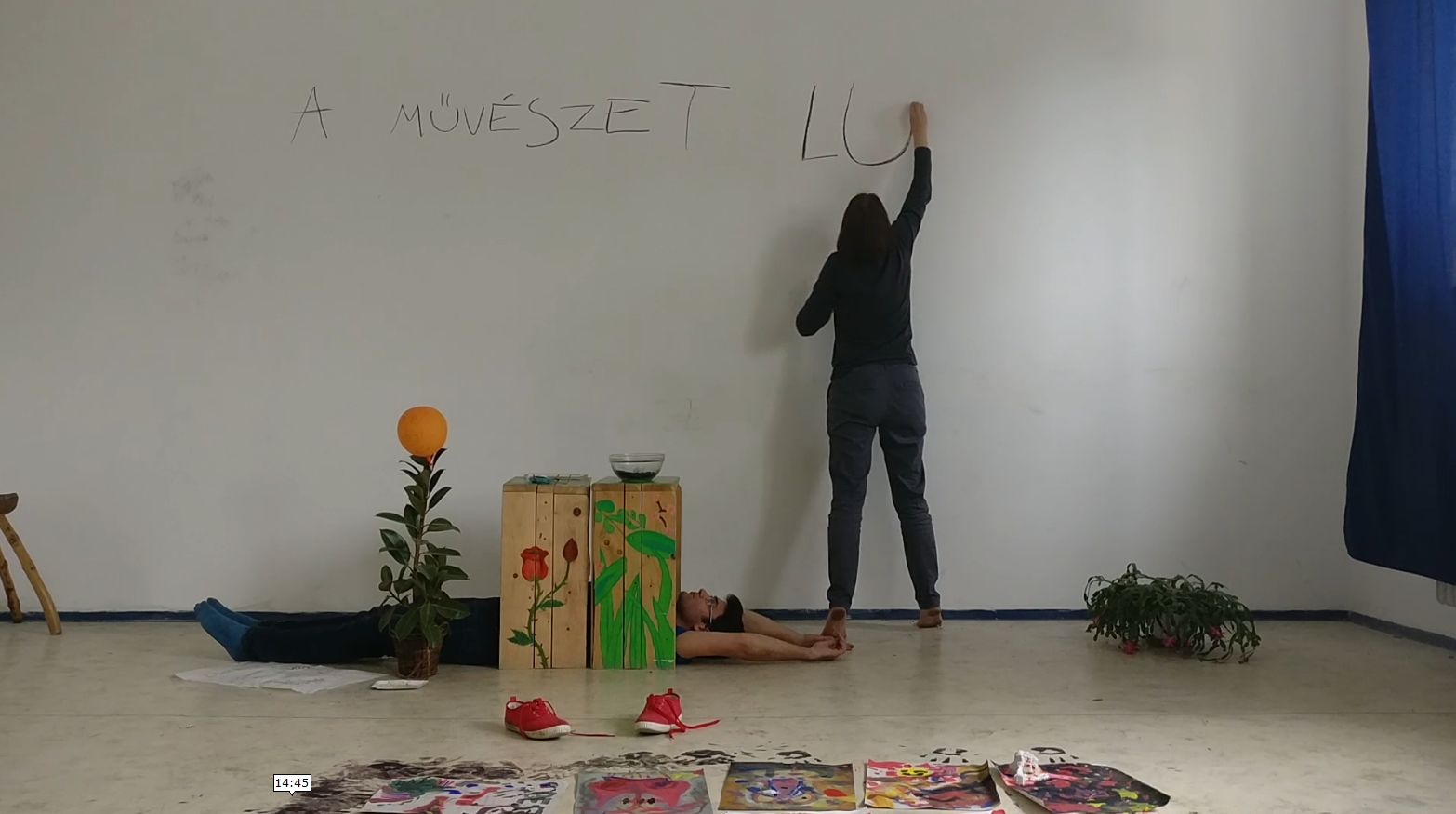
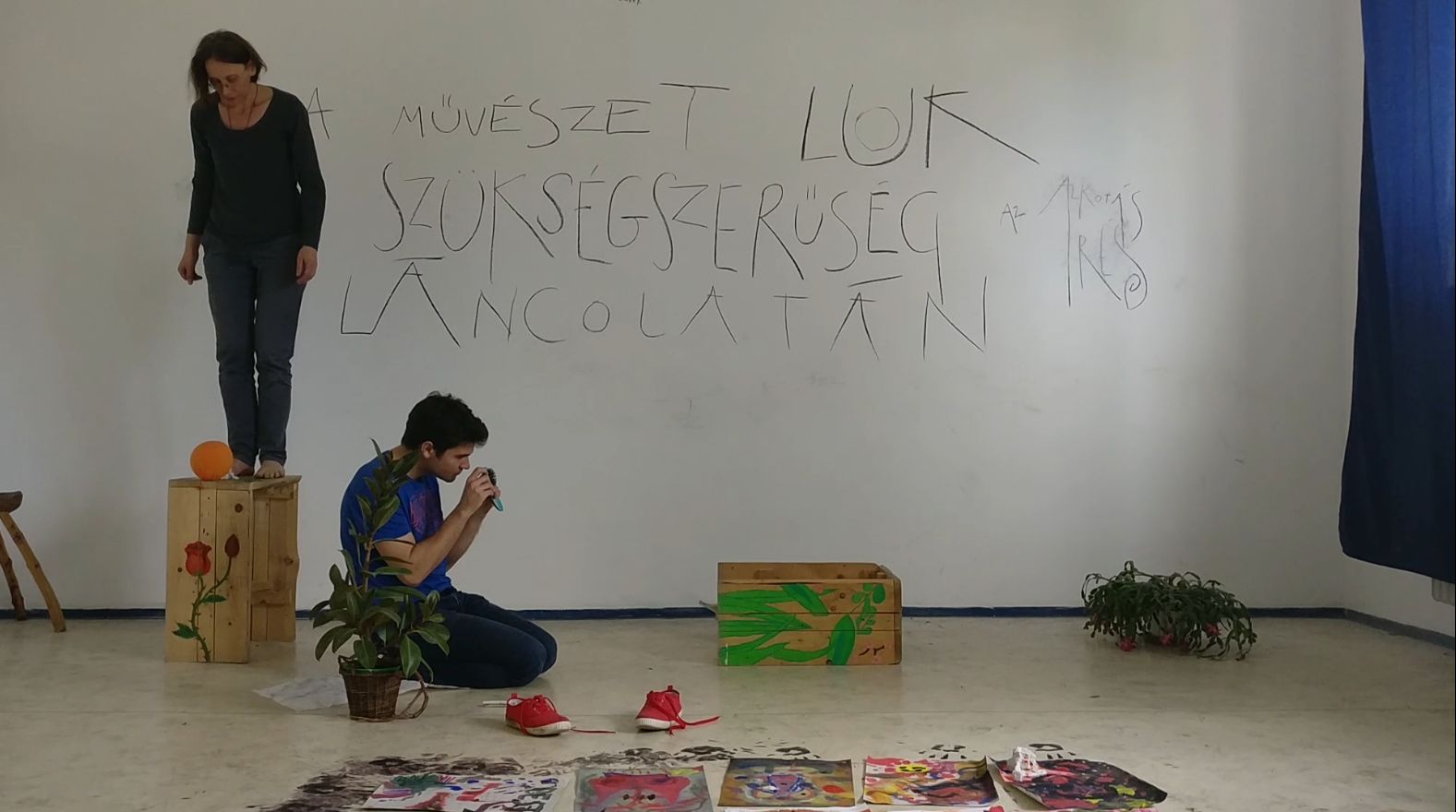
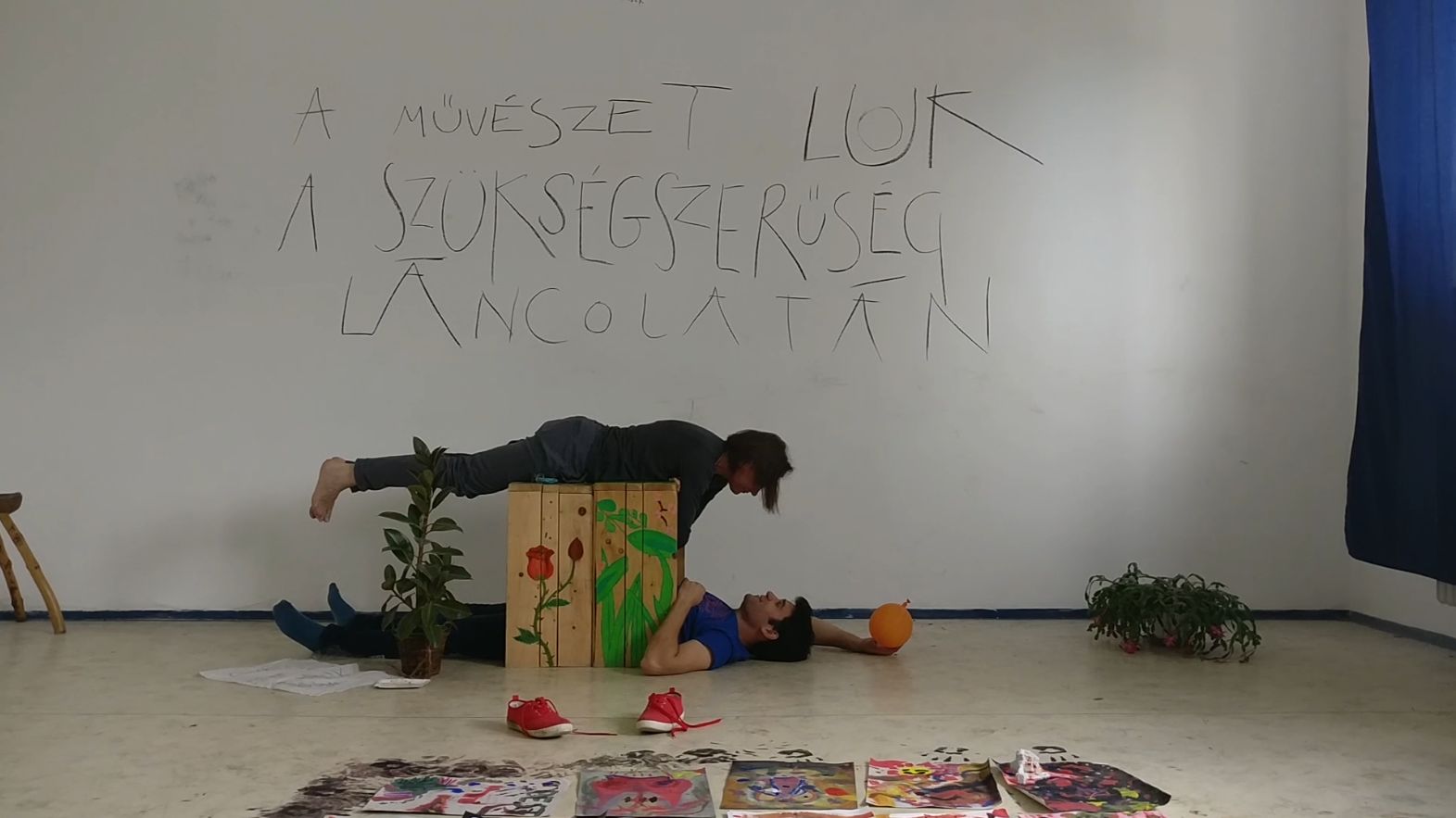
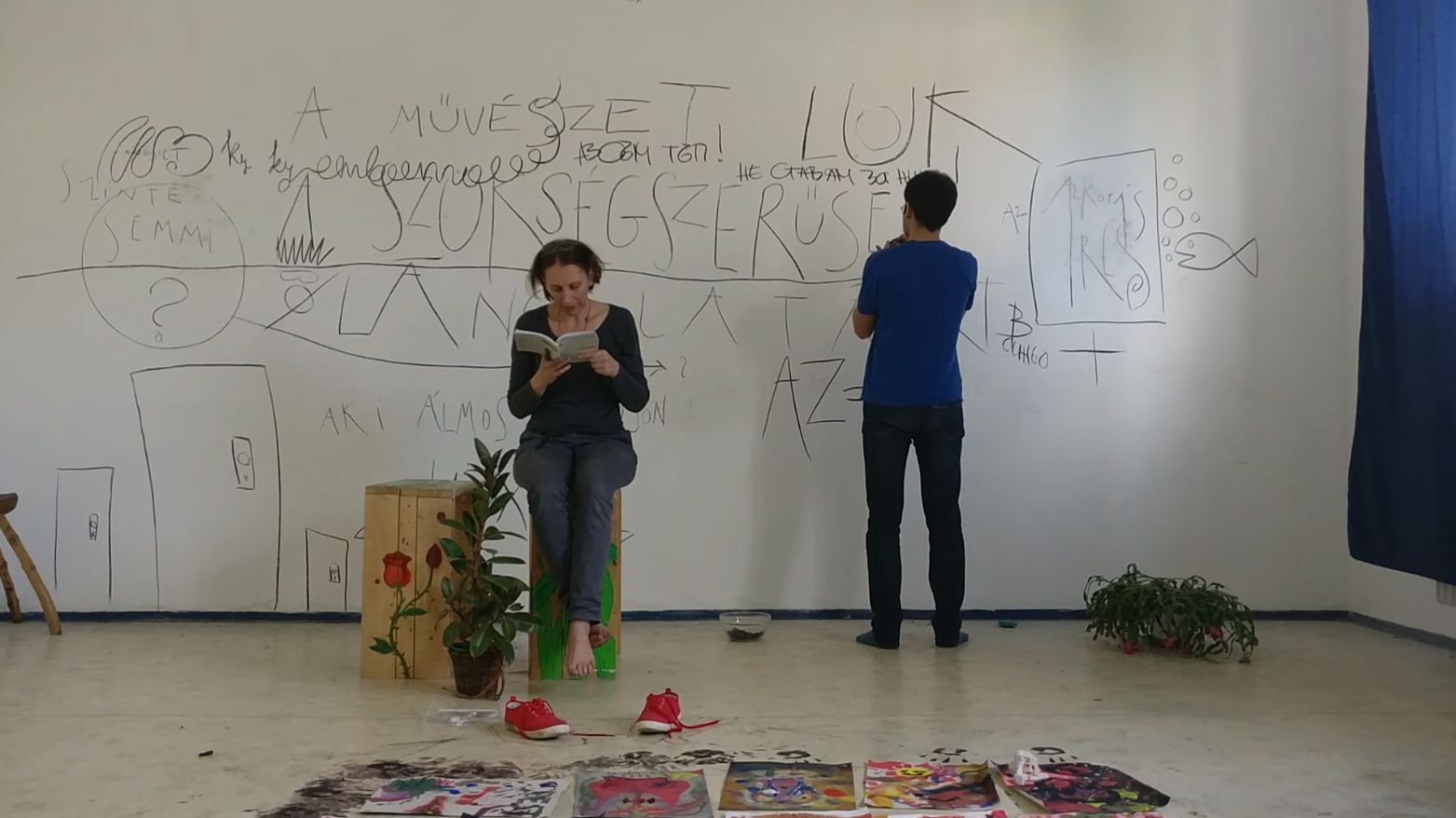
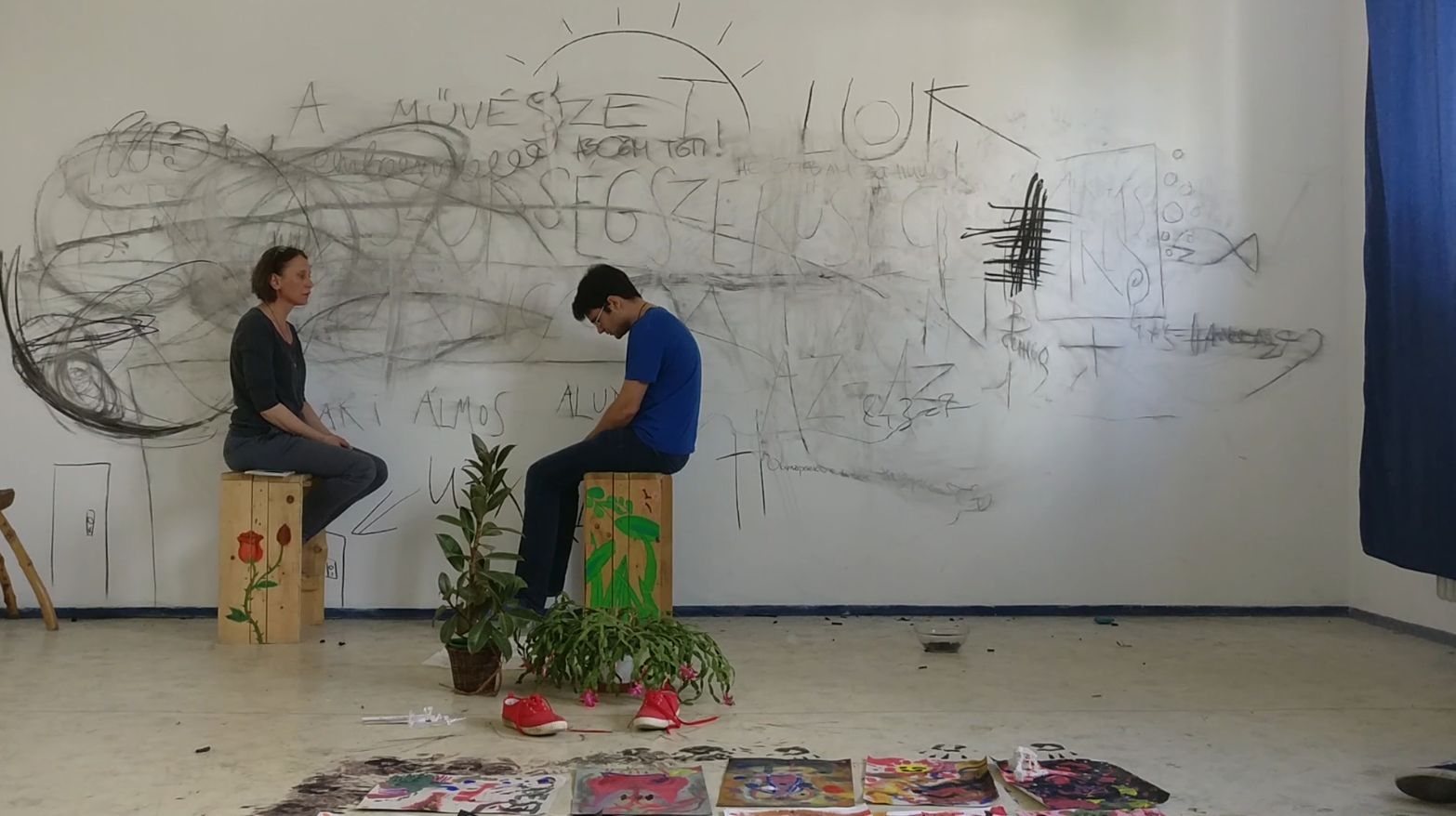
Lecture performance
65 min
2017.05.26.
The best way to answer the question of what contemporary art is, is to find an answer that is in harmony with what we are talking about.
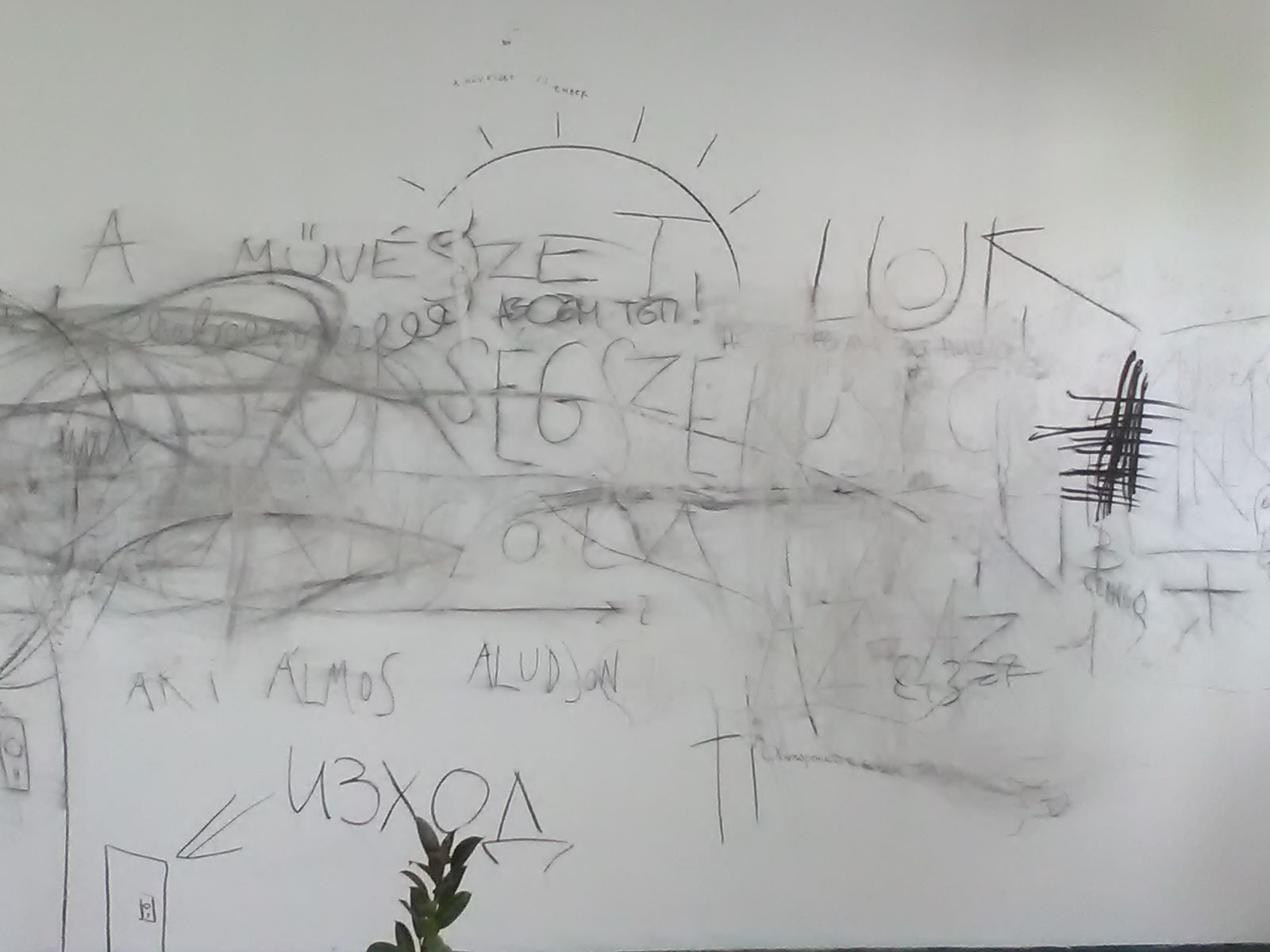
Combining the genres of lecture and performance art, we focus on Miklós Erdély’s thoughts on defining the role of art. According to him, art is a hole in the chain of necessity.
Erdély was also an excellent starting point because, as a central figure in the Hungarian neo-avant-garde movement, it can be considered as the architect of contemporary artistic guidelines, and the study of his artistic and teaching/performing attitudes can also shape our investigations of contemporary Hungarian art remarkably. In this way, we have raised not only philosophical and ideohistorical issues, but also the personal and social contexts and the self-image-shaping character of Eastern Europeanism. We have traced an intellectual and theoretical arc from an examination of the post-World War II era of the avant-garde, from the all-questioning, nullifying destructions of the Fluxus movement, through the conceptualism building towards the Zen Buddhist Nothingness sought by Cage, to Hannes Böhringer, who compromised with postmodernism to arrive at an aestheticizing approach to Almost Nothing.
In this we have identified the intellectual connections of Miklós Erdély, which we have thus seen in the period from the neo-avant-garde to its reconciliation with postmodernism, which was the universalisation of the avant-garde by freezing it into many ways of formalism and at the same time the eradication of its political agentiality.
The lecture performance was presented to our students graduating in visual culture and aiming to study art at university. Our experiment was also a model of how art theory could be taught in a neo-modern education, as opposed to the conservative guideline art education of today.