Gerillastatutes
Darnózseli
Sajópüspöki
July 2024
It may seem absurd to erect a monument to women whose lives are not a monument to success, achievement or example, who are not historical greats, not political heroes. Perhaps their lives embody the opposite of all these, the lack of social opportunities, suffering, hopelessness.
The lives of Jolán, Judit, Henriett and many other women who have suffered tragic endings could have been very different if they had lived in a healthier society, where people were guided by compassion and love, and if institutions had been built to create and ensure the value of solidarity. As long as education, health, cultural policy and the labour market do not provide adequate opportunities for all women, regardless of the family they are born into, violence will continue to shape people’s lives in many ways, especially those of the most vulnerable.
We have created monuments to women who were not heroes, but victims who were ignored, abandoned and suffered terrible tortures. Yet they are examples, if not role models. They are examples that we must not forget and that we feel it is important to express by erecting these monuments: there are still masses of women who, because of their social disadvantages, cannot cope and are vulnerable to the many forms and the devastating cruelties of male violence.
With our work, we want to remember them, to give thanks for what they may never have received from anyone in their lives: gratitude for having existed and for having fought for a better life.
We reclaim the right to erect a monument from a patriarchal political system that fails to stop violence against women, to eliminate gender inequality and to take appropriate measures to compensate for women’s disadvantages. We reclaim, with faith in the value of the sisterhood of women, the right to remember the victims who have been failed by society in many ways. Their story is not a private matter, not a family matter, but a public matter. The personal fates of women are the sum of the consequences of a system based on violence. We interpret the violence that led to the taking of their lives as an individual manifestation of a collective experience. Because we still live in a world where this can happen to almost any women.
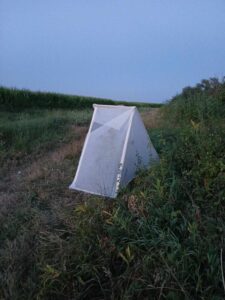
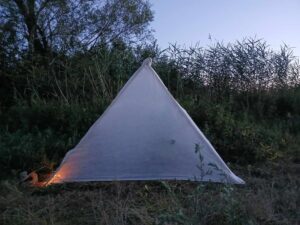
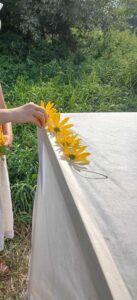
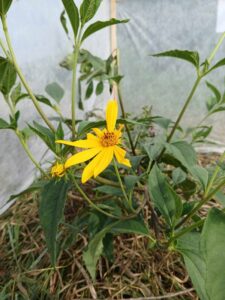
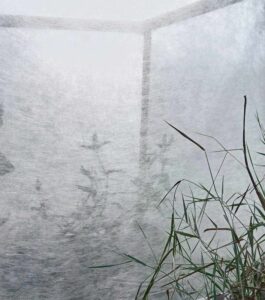
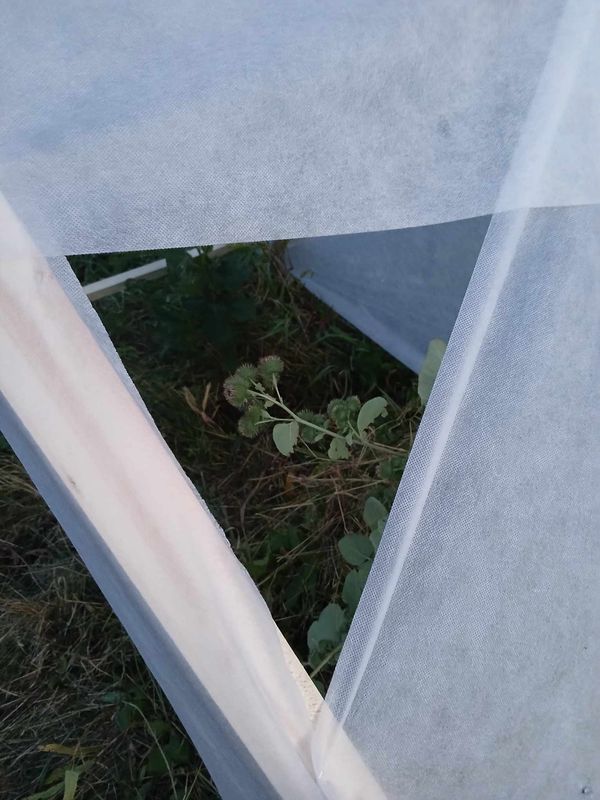
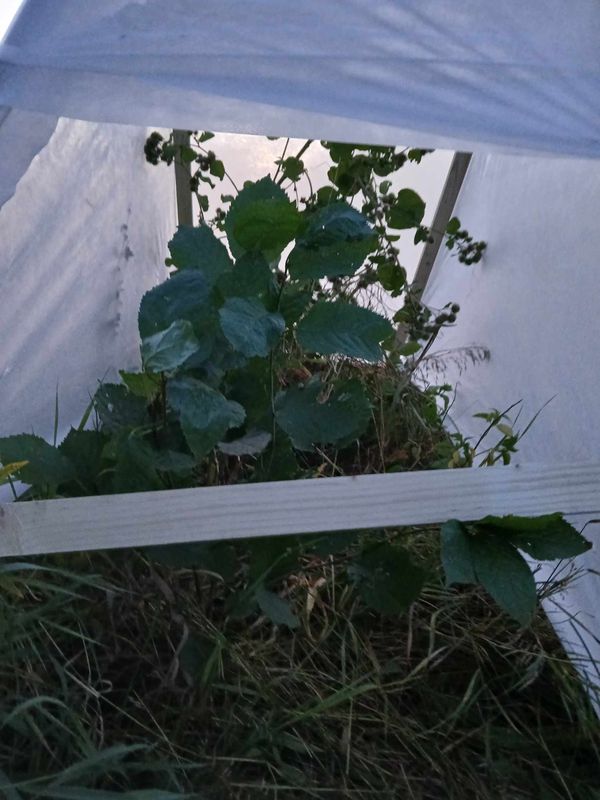
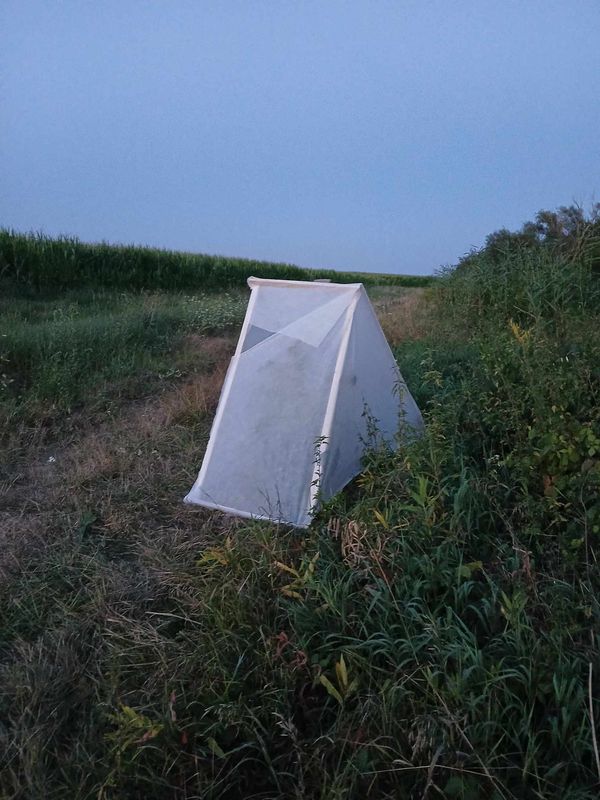
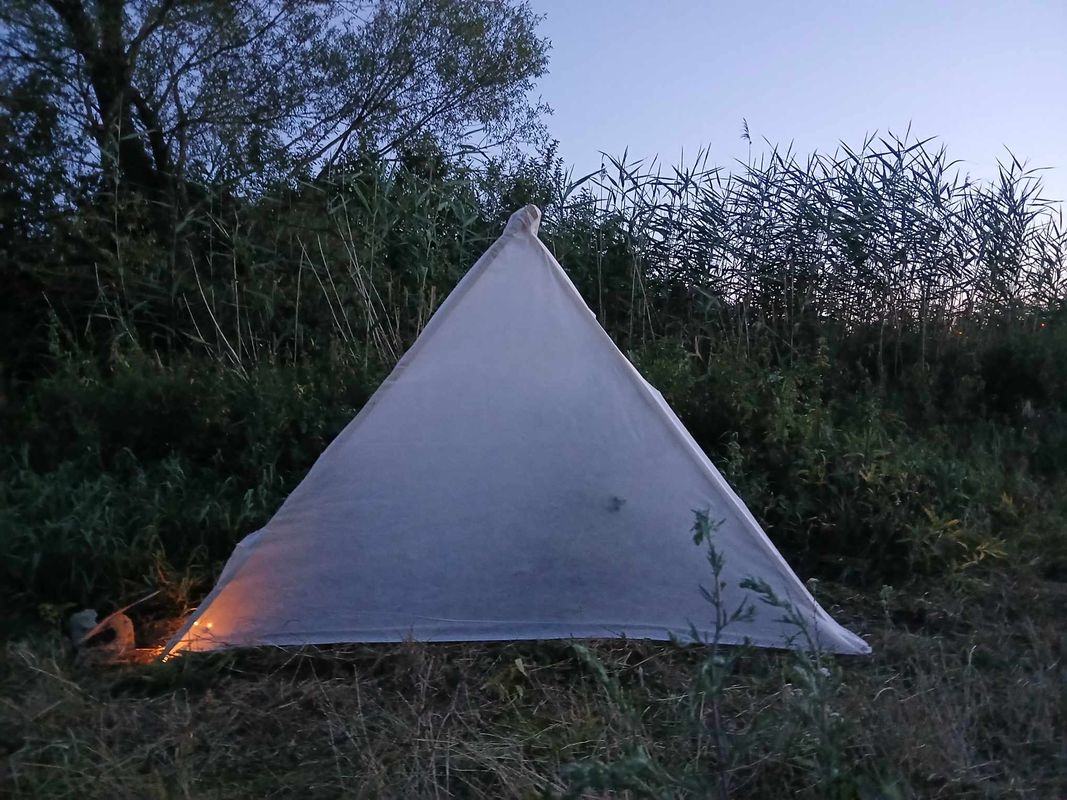
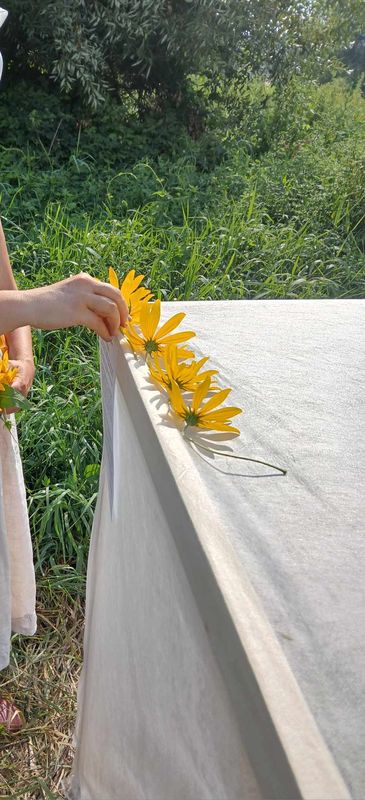
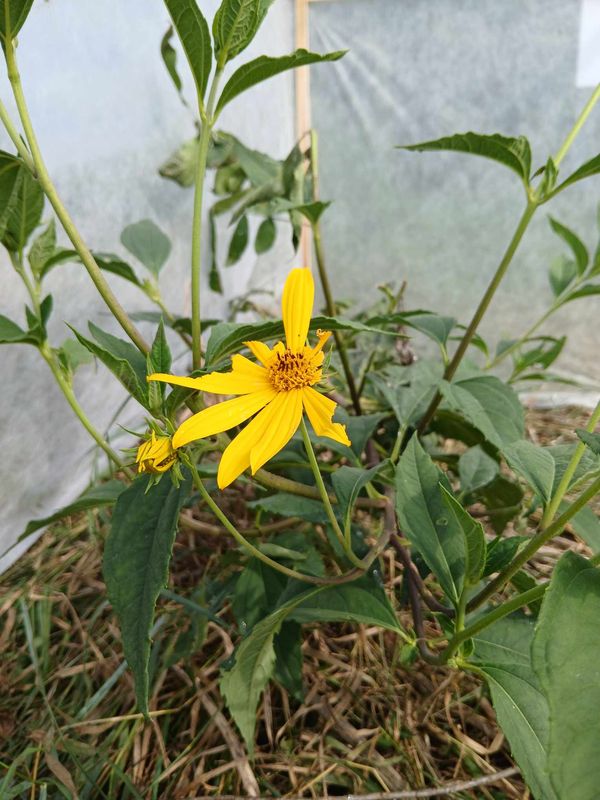
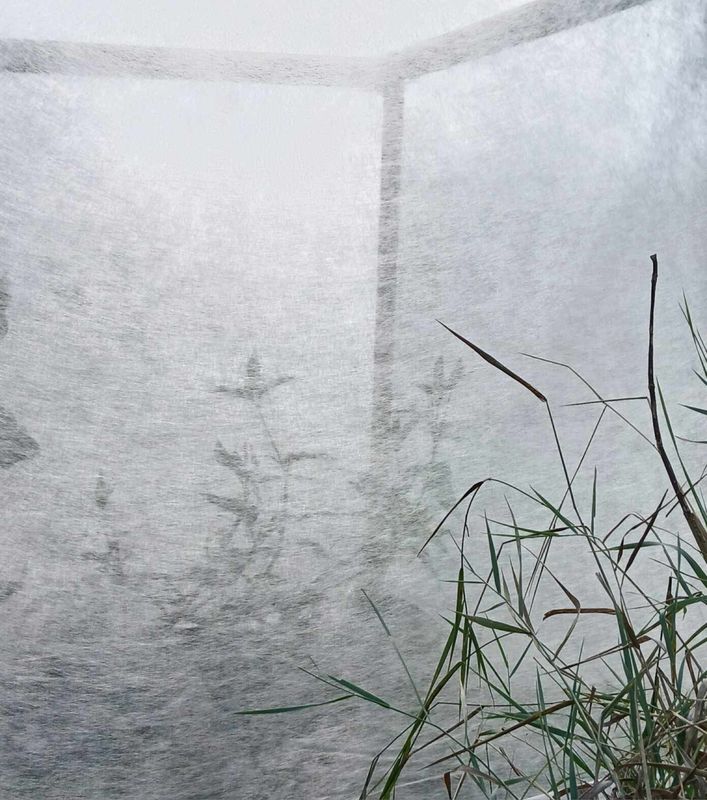
The monuments are created with an ecofeminist approach. The form we design is abstractly linked to the life of the person we want to remember. They are created using only biodegradable, natural materials and covered with a white, natural cover. The location of the installation is also linked to the fate of the woman we are dealing with. We always plant a tree inside the form and create a small inner garden around it. Our aim is that the memorial will become part of nature over time, and as the tree grows taller, our work will diminish, and the strength of sisterhood and solidarity between women will grow. We conclude the construction of the monument with a ritual of a few simple gestures to express this desire.
Monument to Henriett Szűcs
Sajópüspöki
28 July 2024
Who was Henriett Szűcs?
The story of Henriett Szűcs – or Heni, as she liked to be known – was featured in the English-language press in 2019. She was born in 1984 in Sajópüspöki, near the Slovakian border in Borsod. The settlement’s inhabitants made their living from the former iron ore mining industry, but the closure of the mine meant the end of jobs and the settlement was still struggling with natural pollution in 2022. The extreme social inequality that has increased since the change of regime, the shrinking opportunities for people in rural areas, the lack of jobs and the impoverishment of the villagers, reflects the transformation of our country into a neoliberal capitalist era. The Hungarian situation is also characterised by the fact that Heni’s tragic death was reported only in the tabloids (Ripost, Metropol, Bors), while abroad it was reported by quality newspapers such as BBC News, News Sky, The Guardian, which described the case as the most brutal violence against women. On 3 September 2020, BBC News reported in detail on the conviction of the perpetrator, but also published a separate article by Daniel De Simone. This article of just under 3,000 characters is the most in-depth and personal account of Henriett’s life.
Heni got a job in a wire factory near Sajópüspöki, according to her mother, after she did not finish high school, gave birth young, but left the factory, she did not like it. In 2012 and 2014 she went abroad, first to Germany and then to London to try her luck. At 30, she started working as a prostitute. On arrival in London, her Hungarian partner robbed her, stole her passport, and shortly afterwards she met the man who would become her murderer a few months later, probably in September 2016. He kept her locked up and forced her into prostitution, beating her. According to the investigation, Henriett had her last contact with others in August 2016, so the exact date of her death could not be established. Her body was found in 2019 in a freezer in the perpetrator’s apartment, along with the body of another Turkish woman with three children, 38-year-old Mihrican Mustafa. Investigators found that Henriett’s head may have been severely injured at the time of her death.
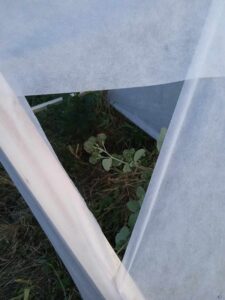
The perpetrator, Zanid Yohunis, was sentenced to life imprisonment in September 2020, 4 years after the murder. The shape and size of the memorial is based on a common refrigerated box used in the countryside for storing food (200 cm x 80 cm X 70 cm). During the ritual, we lay down in the box with our faces covered. The white covering on the crate-shaped mould was split in several places to allow the plants to grow from inside to outside.
Monument to Judit Kovács
Darnózseli
27 July 2024
Who was Judit Kovács?
For a long time Judit Kovács was known in the press as Judit K.. Judit was last seen on 27 May 2014 at her practice in Mosonmagyaróvár, where the 40-year-old mother of two worked as a physiotherapist.
Judit had wanted to divorce her abusive husband, János Nagy, in 2012, as he said because she had fallen in love with someone. They fought a lot, the man beat her several times, pulled her hair out, and audio recordings show his threatening behaviour. She reported him for assault and moved out. She was initially awarded both their children, and János Nagy was put on probation for two years and ordered to keep away. But in a new custody trial, the man was awarded the children anyway. The dispute on the husband’s side was over community property, with the husband having said earlier that he would give up the children if the wife gave up her share of the property in the Darnozseli house. Judit, did not want to agree to this, but as she could not see the children enough, she decided to move back to the house with her children until the divorce was finalised. This may have been the reason why the husband planned the murder.
János Nagy, the butcher, killed her at the clinic, took her body home in the boot of his car, and partially dismembered and burned her carcass in his butcher’s shop. He put the remaining organs in black garbage bags. The next day he received medical treatment for a broken hand, possibly injured in a struggle. Later, he was seen scattering something from a black garbage bag in the meadow of Darnozseli. The day after Judit’s disappearance, her parents and brother filed a complaint and immediately blamed the husband for the disappearance of a woman they knew well, who had been in a rough divorce situation. János Nagy’s sister gave evidence, providing him with an alibi for the time in question.
However, the mobile phone cell phone information did not match this claim. Janos Nagy was acquitted in the first instance, and in October 2019, more than five years later, when the body parts scattered in the meadow in Darnózseli were identified by genetic testing and the mobile phone cell phone information was available, he was sentenced in the second instance to only seven years in prison for the crimes of assault causing death and slight bodily harm. According to the judge, Dr. Tamás Kovács, it was not possible to say with absolute certainty that the accused had killed his wife, but it was certain that he had destroyed the body and then scattered the remains. According to János Nagy’s lawyer, Dr. Tamás Jován, “if we do not know the cause of death, there is nothing to look for…the crime cannot be proven.” It was only in the third stage, on 5 October 2020, thanks to the work of Dr András Gál, lawyer, that the charge of premeditated murder was handed down more than six years after the brutal murder, and the sentence of 21 years in prison was passed. János Nagy was at large all these years, his children lived with him and he worked as a driver, formally earning money.
The case, which lasted for years, was initially reported regularly and in detail in Kisalföld, and several photos of Judit were published in the tabloids Blikk and Ripost. Thanks to this, we were able to find out Judit’s family name, as her parents and her brother were looking for her by her full name in 2014, when her portrait was published.
In 2019, Házon kívül published a report with János Nagy, in which it is said that the man did not even put a single photo of the missing mother on display for the children in the house, and did not even care about appearances: he did not start looking for his wife because of her whereabouts, although he denied her guilt all along. In the interview, his main complaint was that he could no longer work as a butcher, because who would buy butcher’s goods from him after such a discrediting.
It can be said that the second decision on child custody was the consequence of the murder of a mother who loved her children. To this day, no investigation and no proceedings have been launched into the negligent decisions of the judicial actors.
In England, the murderer of Henriett Szűcs was sentenced to life imprisonment, while the Hungarian court sentenced the particularly cruel butcher to only 21 years for premeditated murder and the disposal of the body, and his sister, who had misled the court for six years and perjured herself, to only one and a half years. In Hungary, even the cruelest murder does not carry a life sentence, even if it involves the life of a mother.
The shape of the monument is a slightly twisted triangle. Judith’s life of independence, of turning away from her husband, of rising from his terror, and then of sudden decline, is represented by the shape of the triangle, in which a cherry tree, a favourite of the children, is planted. Perhaps one day his children and grandchildren will pick fruit from it.
- Mind
- Darnózseli
- Sajópüspöki